 The LTM Annual National Pantomime started with English fairy tales, but the modern Pantomime is a reflection of Jamaican lifestyle, history and culture. The story lines of Pantomimes have depicted rural and urban communities, the uptown- downtown divide and our love affair with sports and music. Topical issues and historical events have also been captured on the Pantomime stage. For this reason, the LTM Pantomime has been of interest to local and international scholars and has been the subject of several theses. A collection of Pantomime scripts is lodged in the J. Eugene Smith Library of the East Connecticut State University, USA. Wycliffe and Hazel Bennett’s book “The Jamaican Theatre” also gives an in-depth look at the Pantomime. Articles have been published in airline magazines such as BWIA’s “Caribbean Beat” and Air Jamaica’s “Skywritings” and the leading Jamaican newspapers over the years. The Pantomime has also been captured on film, with retrospectives and features appearing on local television stations. LTM Pantomimes have toured the USA, UK, Canada and Trinidad and Tobago and have been staged in the UK and the Cayman Islands.
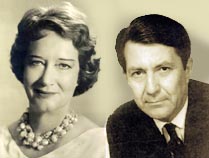
The Little Theatre Movement (LTM) has the distinction of being Jamaica’s longest surviving theatre company of contemporary times. It was founded in 1941 by Henry Fowler and Greta Bourke (later Fowler) to raise funds for the building of a Little Theatre, and to help in the development of drama in Jamaica. From its inception, the LTM committed itself to a vigorous policy of serving the public.
The first production was staged in 1941 and opened on Boxing Day – December 26 – as was the custom in England. “Jack and the Beanstalk, was the first production and featured British expatriates and Jamaicans who were familiar with the tradition. It featured the in keeping with the tradition of English Theatre from where it came to Jamaica. In that form, a tale of childhood was adapted for the stage with elements of music, song, dance, comedy, drama and colourful costumes and sets.
Times have changed, but in Jamaica, Boxing Day remains constant as the opening day for Pantomime. That is perhaps the only thing from the British Tradition which has remained unchanged. European folklore has given way to lusty tales of the Caribbean, with dialogue in patois and humour reflecting the robust sense of comedy of these “islands in the sun”. The LTM also produced other dramatic works often theatrical classics before concentrating solely on the pantomime in the 1980s.
“Jamaicanizing the Pantomime”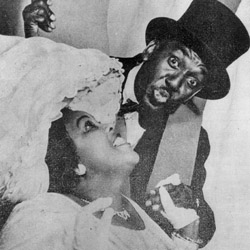
The indigenization of the form owes much to two legends of Jamaican theatre – Louise Bennett-Coverley and the late Ranny Williams who were among the pioneers of the LTM and who did much to mould the annual show into a unique creation, which features aspects of Jamaican culture, folklore and historical references. The Pantomime prides itself on its universal appeal to children and adults alike. In so doing the Pantomime has utilised some of Jamaica’s leading talent in every area of production, from script writing to music composition, set and costume design, choreography as well as on-stage performance. The members of the Pantomime Company are called upon to learn various skills.
Over the years, the LTM National Pantomime has become a prime source of material for cultural researchers of one kind or another. Students of all levels – primary through to tertiary – conduct research on the Pantomime exploring this unique take on Jamaican-Caribbean folk roots. There is no recorded equivalent of a similar sustained theatre tradition in the English-speaking Caribbean.
More on the Pantomime
Pantomime Personalities over the years
The LTM Pantomime cast lists read as a who’s who in Jamaican visual and performing arts. Undoubtedly, the most well known names are Louise Bennett-Coverley and Ranny Williams, who both served as authors as well as performers. The list of famed performers include Oliver Samuels, Leonie Forbes, Lois Kelly-Miller, Charles Hyatt, Volier Johnson, Willard White, Rita Marley, Dawn Penn and others.
Creative Input
Authors
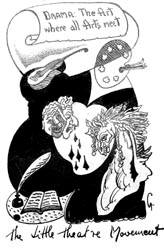
Greta Fowler remarked that “drama is where all arts meet”, and the pantomime has recorded a long list of artists who gave their time and talent to the process. Hon. Barbara Gloudon has authored the most pantomimes for the LTM, she is joined in the list of authors by Louise Bennett, Greta Fowler, Lloyd Reckord, Trevor Rhone, Pat Cumper, Ted Dwyer, Dennis Scott and others.
Directors
A Pantomime director is required to not only to interpret the author’s words but to pull together all the elements of the show – set changes, lighting, costuming and musical numbers. The list of distinguished directors is headed by Brian Heap who began his involvement with the Pantomime as an actor in Pirate Princess. He has piloted over 10 productions and is joined by Robert Clarke another actor who has now directed more than five shows. Past directors include Noel Vaz, Lloyd Reckord, Maurice Harty, Bobby Ghisays and Norman Rae.
Musical talent
The Pantomime has always performed with a live band using a mixture of traditional and folk songs and original music. The talents of Marjorie Whylie, Robert Lightbourne, Grub Cooper, Conroy Cooper, Peter Ashbourne, Boris Gardner, Carlos Malcolm, Desi Jones, Noel Dexter, Ibo Cooper, Lloyd Lovindeer among others have enriched the productions.
In an effort to involve up-coming musicians the LTM band has also included past and present students of the Edna Manley College, Kingston Drummers and the Alpha Boys Band.
Artistic talent
Due to the size of the spaces in which theatre is normally performed in Jamaica, theatre goers have become used to the “one room” set. The Pantomime, with the luxury of being performed on a larger stage (the Ward Theatre and the Little Theatre) with adequate backstage space and fly towers has been able to bring to life a variety of locations from rural and urban Jamaica to the moon.
With the creative use of flats, backdrops and platform units the set designers challenge the stage manager and the backstage crew to move seamlessly from one setting to another as a show progresses. Some of the talent who have designed sets for the Pantomime over the years include Karl Abrahams, Albert Huie, Colin Garland, Lorna Goodison and Henry Muttoo. In the more recent years designers for sets and props have included Denise Forbes, Symonne Coombs, Larry Watson and Michael Lorde.
Costumes have become an integral part of the visual element of the Pantomime. The use of clothing to effectively define characters on stage expressing their themes and motives to an audience which includes very young children is vital to the Pantomime. Costume designers for the pantomime have included Patrick Waldemar, Norman Russell, Eddy Thomas, Henry Muttoo, Angela Waterlow and Anya Gloudon.
Choreography
The Jamaican dance tradition is also represented with choreographers such as Rex Nettleford, Eddy Thomas, L’antoinette Stines, Jackie Guy, Tony Wilson, Bert Rose, Monica Potts-Lawrence and Joyce Campbell.